
In an increasingly data-driven world, organizations are faced with the dual challenge of managing vast amounts of information while ensuring compliance with ever-evolving regulations

In an increasingly data-driven world, organizations are faced with the dual challenge of managing vast amounts of information while ensuring compliance with ever-evolving regulations
In an increasingly data-driven world, organizations are faced with the dual challenge of managing vast amounts of information while ensuring compliance with ever-evolving regulations

In an increasingly data-driven world, organizations are faced with the dual challenge of managing vast amounts of information while ensuring compliance with ever-evolving regulations

In an increasingly data-driven world, organizations are faced with the dual challenge of managing vast amounts of information while ensuring compliance with ever-evolving regulations

Charlotte, North Carolina — 22nd July 2024 — Infobelt, a leader in data archiving and regulatory compliance solutions, is proud to announce its recognition in Gartner’s Hype Cycle for Backup and Data Protection Technologies, 2024 report. This acknowledgment highlights Infobelt’s innovative approach to data archiving technology and its effective solutions for legacy application retirement. The recently released “Hype Cycle for Backup and Data Protection Technologies, 2024” highlights emerging and hyped technologies that are reshaping the landscape of data management. According to Gartner, this year’s Hype Cycle introduces several new innovations, including data archiving, backup data reuse, infrastructure consumption services, and cold storage. These advancements provide valuable insights into specific technologies that can enhance data protection efforts and improve overall data lifecycle management. The inclusion in Gartner’s report underscores the growing importance of specialized data archiving solutions in today’s data-driven landscape. As organizations face challenges from unstructured data growth, mergers and acquisitions, and the need for application modernization, Infobelt’s OAM provides a vital solution for improving data accessibility, reducing technical debt, and ensuring compliance with regulatory mandates. Infobelt’s flagship product, the OMNI Archive Manager (OAM), is a comprehensive platform designed to streamline the management of structured, semi-structured, and unstructured data. OAM simplifies regulatory compliance by archiving, verifying, compressing, encrypting, indexing, and extracting data, ensuring organizations can confidently navigate the complexities of data governance. With advanced features such as robotic process automation (RPA) and machine learning (ML), OAM enhances information protection, privacy, and process efficiency. Key Features of OMNI Archive Manager Comprehensive Data Management OAM archives and manages various data types while offering robust search capabilities and workflow interfaces. Regulatory Compliance The platform is designed to meet SEC 17a-3 & 17a-4 compliance, significantly reducing storage costs and infrastructure expenses. Full Records Management OAM includes features such as record class codes, retention periods, disposition holds, and comprehensive auditing capabilities to meet regulatory standards. AQL Copilot (AI-based Archive Query Language) OAM leverages advanced AI to retrieve data and generate reports through natural language queries, making data analysis and reporting faster and more intuitive. Enhanced Security OAM ensures enterprise security with encryption for archived data, enabling secure record-owner tracking and in-place querying without full data restoration. With its high-performance archiving engine, Infobelt’s OAM empowers organizations to optimize their data management processes while minimizing risks and ensuring compliance in an increasingly complex regulatory environment. Key Benefits of Data Archiving Centralization and e-Discovery Simplifies compliance and e-discovery processes while enhancing data categorization and retention. Optimized Storage Utilization Mitigates risks and improves operational efficiencies across the information lifecycle. Application Retirement Enables organizations to phase out outdated applications and infrastructure, thereby reducing technical debt. “We are honored to be recognized by Gartner for our advancements in data archiving technology,” said Srini Mannava, Founder & CEO of Infobelt. “Our OMNI Archive Manager is designed to empower organizations to manage their data effectively while navigating the increasingly complex regulatory landscape,” said Kevin Davis, Founder and Chief Delivery Officer. As businesses strive to harness the full potential of their data, Infobelt remains dedicated to providing innovative solutions that enhance data management and compliance. For more information, visit: https://infobelt.com/ Gartner Disclaimer:Gartner does not endorse any vendor, product or service depicted in its research publications and does not advise technology users to select only those vendors with the highest ratings or other designation. Gartner research publications consist of the opinions of Gartner’s research organization and should not be construed as statements of fact. Gartner disclaims all warranties, expressed or implied, with respect to this research, including any warranties of merchantability or fitness for a particular purpose.About Infobelt As a trusted partner, Infobelt is committed to empowering organizations of all sizes with cutting-edge data archiving solutions and expert guidance. Together, we strive to create a future where data management and regulatory compliance are seamless, efficient, and secure. Our team works closely with clients, either alongside their internal teams or as an extension, to minimize exposure to regulatory penalties and optimize data management practices. By leveraging our deep industry knowledge and proven methodologies, we help enterprises confidently navigate the increasingly complex regulatory landscape and unlock the full potential of their data assets.
Everyone who has worked in records management has seen it before: Organizations keeping their backup copies of production data “because it’s needed for compliance.” This, however, turns out to be a costly move…and one that does not really address data retention needs. What is really needed for data retention is a proper data archiving system.Which prompts the question: What is the difference? Why is backup not suitable for compliance, and what is gained from investing in a true enterprise data archive?Archiving vs. Backup: Two Different MissionsThe short answer to the above is that archiving solutions and backup solutions were created with two different goals in mind: Backup makes a copy of data (both active and inactive) so that, should that data become damaged, corrupted, or missing, it can be recovered quickly. Archiving makes a copy of inactive or historical data so it can be stored in an unalterable, cost-effective way for legal or compliance reasons. Backup is an important part of a business continuity plan. Should a piece of hardware fail, or a database become corrupted, it still will be possible to recover the necessary data to keep business operations going.Maintaining a backup system can be costly, however. The data in the system needs to be updated often, and made easily recoverable, should a disaster happen. The space and cost required to do so can become quite large as an organization’s data grows.Archiving stems from the realization that not all data an organization has is needed for daily operations—it is not production data. Examples include old forms, transaction records, old email communications, closed accounts, and other historical data. But while this data has no ongoing use, it has to be kept to comply with laws having to do with data retention.It’s easy to see how the two might be confused—after all, both kinds of technology are, in essence, making a copy of the organization’s data.But whenever you have two different goals or purposes for two different pieces of technology, you are going to have some important differences as well. If those differences are large enough, you won’t be able to simply swap one technology for the other. At least, not without some major problems.First Major Difference: The Cost of SpaceWhen a bit of data is stored, there is a cost associated with it. That’s true whether that data sits in the cloud, on an on-prem server, or on a tape drive in a closet somewhere.Not all storage costs are equal. Take cloud providers like AWS, Microsoft (Azure), and Google, for example. These big players tier their storage offerings, basing the price on things like accessibility, security, and optimization for computations. “Hot storage” holds data that might be used day-to-day and needs to be optimized for computing, and so is relatively much more expensive. “Cool” or “cold” storage is for data that is rarely used, and so does not need to be optimized or accessed quickly. Thus, it tends to be cheaper—sometimes by half or more.The same goes for on-prem storage. Some data needs to be readily accessible, and so located on a server that needs to be maintained and secured. There are many more options for data that does not need to be accessible, like historical data.The longer an organization stays up and running, the greater its older, inactive historical data is in proportion to its active data. This is why archiving is important: It saves this inactive data in a much more cost-efficient way, freeing up the systems that traffic in active data (and freeing up storage budget).Second Major Difference: ImmutabilityAn important part of compliance with data retention laws is keeping the data in an unaltered, and unalterable, state. This is where the idea of immutable storage comes into play. Immutable storage, such as a WORM (write once, read many) datastore, cannot be altered, even by an administrator. The data is, in a sense, “frozen in time.”This is important for legal purposes. If data is needed for any reason, it is important to show that it has been stored in a way that resists any sort of tampering or altering. In short, immutability is built into most data archiving solutions, because immutability is important for the very tasks for which archives were engineered. The same might not always be true for data backups.Another benefit of immutability: It provides built-in protection against ransomware attacks.An important part of compliance with data retention laws is keeping the data in an unaltered, and unalterable, state. This is where the idea of immutable storage comes into play. Immutable storage, such as a WORM (write once, read many) datastore, cannot be altered, even by an administrator. The data is, in a sense, “frozen in time.”Third Major Difference: Logging and TrackingAlong with alterability comes the idea of logging or tracking who has accessed a particular bit of data. Having a log of who accessed which data, and when, leaves an important trail of breadcrumbs when it comes to audits, as well as data privacy incidents. Most backup systems do not need this level of logging and tracking—they usually carry just enough information to verify when backup or recovery has been run, and how successful it was. Archiving provides a much more granular level of detail.Fourth Major Difference: Scheduled DestructionOnce data is no longer needed for compliance purposes, it should be destroyed. That way, it no longer takes up space, nor runs the risk of being compromised (which can be a data privacy issue).Best-in-class archives, because they are focused on compliance needs, have such scheduled destruction built in. Backup systems usually do not, as that would be antithetical to their purpose of saving data. (At best, backup systems overwrite previous backups, and some let the user determine how many backup copies need to stay current.)Archiving and Backup: Which Does Your Organization Need? (And How Do You Know?)Really, most enterprise-sized organizations need both. Business continuity plans need to include solutions for backup.But those solutions make for a very costly, and mostly inadequate, archiving solution for compliance purposes.
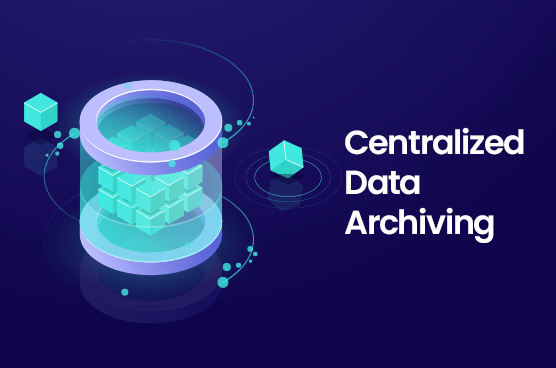
In today’s data-driven landscape, organizations are inundated with vast amounts of information. As businesses continue to grow and evolve, the challenge of managing and retaining data effectively becomes increasingly complex. Data archiving solutions have emerged as a vital strategy for organizations aiming to streamline their data management processes, ensure compliance, and enhance operational efficiencies. This blog explores the industry challenges, use cases, technical solutions, business benefits, and implementation recommendations for data archiving.The challenges of compliance and rapid data growth.Organizations face several significant challenges in managing their data: Data Growth The rapid increase in application and unstructured data leads to siloed and unmanaged data. As data accumulates, it becomes difficult to access and analyze, hindering decision-making processes. Regulatory Compliance With the rise of stringent regulatory requirements, businesses must effectively manage multiple data retention life cycles. Failure to comply can result in severe penalties and reputational damage. Technical Debt Aging application infrastructures combined with limited data migration capabilities create technical debt, complicating data management. This can lead to inefficiencies and increased operational costs. Data Accessibility Isolated data silos hinder access to critical insights, impacting business outcomes and analytics workflows. Without a cohesive strategy, organizations struggle to leverage their data to its full potential. How organizations manage their data.Data archiving solutions support various use cases that can transform how organizations manage their data: Data Storage Efficiency By moving infrequently accessed data to lower-cost storage, organizations can optimize their storage utilization and reduce costs. Data Enrichment Data archiving enhances categorization, e-discovery, and analytics capabilities, leading to better insights and informed decision-making. Corporate Compliance Effective data retention management ensures adherence to corporate and regulatory standards, minimizing legal risks. Application Retirement Data archiving facilitates the decommissioning of outdated applications, helping organizations reduce technical debt and streamline their IT environment. Leveraging a centralized platform for archiving data.Data archiving solutions leverage a centralized platform to address the complexities of data management: Centralize Data Management A centralized approach improves lifecycle management of data across on-premises and cloud environments, ensuring consistency and reliability. Optimize Data Placement These solutions enhance operational efficiencies in file systems, databases, and applications, allowing for better resource allocation. Support Multi-Vendor Environments Data archiving solutions can address the diverse nature of applications and data types with integrated solutions, making them adaptable to various organizational needs. Enhancing access to business data.Implementing a data archiving solution offers numerous advantages for businesses: Improved Data Accessibility Centralized archiving enhances access to critical data, facilitating informed decision-making and driving business growth. Operational Efficiencies Streamlined data management processes reduce storage requirements and associated costs, leading to a more efficient IT environment. Risk Mitigation Effective data retention practices minimize legal risks and ensure compliance with regulations, protecting organizations from potential liabilities. Reduced Technical Debt By retiring legacy applications and infrastructures, organizations can create a leaner, more efficient IT environment, allowing them to focus on innovation. Road map for implementing data archiving technology.To successfully implement data archiving solutions, organizations should consider the following recommendations: Define Business Requirements Clearly outline expected outcomes and data lifecycle management needs before vendor selection to ensure alignment with business goals. Differentiate Solutions Understand the distinction between data archiving and backup solutions to select the right approach that meets your organization’s needs. Evaluate Vendor Capabilities Assess potential vendors based on their support for various data sources and their alignment with your business requirements. Ensure Transparency Require vendors to provide clear information on data access, export capabilities, and costs associated with end-of-contract data migration. Establish Cross-Functional Teams Create teams that include diverse stakeholders to prioritize application retirement and data retention policies effectively. ConclusionBy addressing the challenges of data management and leveraging data archiving solutions, organizations can enhance their data strategies, ensure compliance, and drive operational efficiencies. In an era where data is a critical asset, investing in effective data archiving is not just a necessity; it is a strategic advantage that can unlock the full potential of your business. Embrace data archiving today to secure a more efficient and compliant future for your organization.

Semantic indexing is a transformative feature of the Infobelt Omni Archive Manager (OAM) that significantly enhances the searchability of archived data. By focusing on the meaning and context of information rather than relying solely on keywords, semantic indexing allows organizations to retrieve relevant data more intuitively. This blog will explore the definitions, descriptions, use cases, solutions, examples, and benefits of semantic indexing within the context of data archiving. What is Semantic Indexing?Semantic indexing is a process that improves the searchability of data by understanding the relationships and meanings behind words and phrases. Unlike traditional keyword-based indexing, which can miss relevant information if the exact terms are not used, semantic indexing leverages natural language processing (NLP) and ontologies to interpret the context of the data. This method enables users to find pertinent information even when they are unaware of the specific terminology used in the documents. The Role of Semantic Indexing in Data ArchivingData archiving involves the long-term storage of data that is not actively in use but must be retained for compliance, legal, or historical reasons. As organizations accumulate vast amounts of data, the challenge of efficiently retrieving relevant information becomes increasingly complex. Semantic indexing addresses this challenge by: Enhancing Searchability: By understanding the context of the data, users can perform more effective searches, leading to quicker and more accurate retrieval of information. Improving Compliance: Organizations can meet regulatory requirements more effectively by ensuring that they can access relevant archived data when needed. Facilitating Data Analysis: Semantic indexing allows for more thorough analyses of archived data, enabling organizations to derive insights that may not be apparent through traditional search methods. Use Cases of Semantic Indexing Regulatory Compliance: Industries such as finance and healthcare are subject to strict regulations regarding data retention and accessibility. Semantic indexing helps these organizations quickly retrieve relevant documents during audits or investigations. Legal Discovery: In legal contexts, semantic indexing can streamline the discovery process by enabling lawyers to find pertinent case documents without needing to know specific keywords. Research and Development: Researchers can benefit from semantic indexing by easily locating historical data or research papers relevant to their current projects, even if they do not remember the exact titles or terms used. Advantages of semantic search over keyword searchSemantic search offers significant advantages over keyword search by focusing on understanding context, meaning, and user intent, resulting in more accurate, relevant, and user-friendly search experiences. The main advantages of semantic search over traditional keyword search include: Enhanced Accuracy and Relevance: Semantic search improves the precision of results by understanding user intent and the context behind queries. This leads to more relevant search outcomes, reducing the number of irrelevant or misleading results that can occur with keyword searches, which rely solely on exact word matches. Contextual Understanding: Unlike keyword search, which focuses on specific terms, semantic search analyzes the relationships between words and their meanings in context. This capability allows it to differentiate between similar terms and understand nuances, resulting in a more comprehensive understanding of the user’s needs Natural Language Processing: Semantic search can interpret queries posed in natural language, making it easier for users to find information without needing to formulate precise keyword phrases. This natural interaction enhances user experience and satisfaction. Handling Synonyms and Variations: Semantic search recognizes synonyms and related concepts, allowing it to retrieve relevant information even if the exact keywords are not used. This flexibility is particularly beneficial for users who may not know the specific terms associated with their queries. Intent Recognition: Semantic search can discern the underlying intent behind a query—whether the user is seeking information, a product, or a specific type of content. This capability enables more tailored search results that align with user goals. Continuous Learning: Many semantic search systems utilize machine learning to improve over time. They learn from user interactions and feedback, refining their understanding of language and user preferences, which enhances future search results. Improved User Experience: By providing more relevant and context-aware results, semantic search creates a more intuitive and satisfying search experience, which can lead to higher user engagement and retention. Examples of Semantic Indexing in ActionConsider a financial institution that needs to archive thousands of transaction records. With semantic indexing, the institution can search for all transactions related to “fraud” without needing to know the specific terminology used in the records. The semantic index will understand the context and retrieve all relevant documents, significantly reducing the time spent on searches. Another example is a healthcare provider that archives patient records. When a doctor searches for information regarding “diabetes treatment,” semantic indexing can pull up relevant studies, patient histories, and treatment protocols, even if the exact terms differ from those used in the query. Benefits of Semantic Indexing Increased Efficiency: Users can find relevant information faster, reducing the time spent on data retrieval. Enhanced Accuracy: By understanding context, semantic indexing minimizes the chances of missing pertinent data. Better Compliance: Organizations can more easily demonstrate compliance with data retention regulations by ensuring they can access the necessary information when required. Cost Savings: Improved search capabilities can lead to reduced operational costs associated with data management and retrieval. Scalability: As organizations grow and accumulate more data, semantic indexing can scale to accommodate larger datasets without sacrificing performance. In conclusion, semantic indexing is a powerful feature of Infobelt’s Omni Archive Manager that enhances the searchability and usability of archived data. By leveraging contextual understanding, organizations can improve compliance, facilitate thorough analyses, and streamline data retrieval processes, ultimately leading to better decision-making and operational efficiency.

In today’s fast-paced world, industries such as financial services, healthcare, pharmaceuticals, manufacturing, and agriculture are grappling with an ever-growing volume of regulated records. From financial transactions and patient data to drug development and quality control, these sectors are inundated with information that must be managed meticulously to meet compliance requirements. Enter Generative AI, a game-changing technology that has the potential to revolutionize record management in these highly regulated industries. The Regulatory ChallengeBefore we delve into how Generative AI can address the record management challenges in these sectors, it’s crucial to understand the regulatory landscape in which they operate. Industries like finance and healthcare are subject to many stringent regulations and standards, such as HIPAA, GDPR, Sarbanes-Oxley, etc. These regulations impose strict requirements on data storage, retrieval, security, and auditing, making record management a formidable task.Additionally, the pharmaceutical, manufacturing, and agriculture industries must adhere to Good Manufacturing Practices (GMP), Good Laboratory Practices (GLP), and Good Documentation Practices (GDP), which necessitate precise recordkeeping throughout the product lifecycle. Any non-compliance can result in severe consequences, including hefty fines, legal liabilities, and damage to reputation.Generative AI: A Game Changer Generative AI, powered by deep learning algorithms, has the potential to alleviate the record management burden in these industries. Here’s how: 1. Data Extraction and Classification In financial services, healthcare, and other sectors, a vast amount of data is generated daily, often in unstructured formats like documents, emails, and handwritten notes. Generative AI can automatically extract and classify relevant information from these unstructured sources.For instance, in healthcare, Generative AI can scan medical records and automatically identify and categorize patient data, ensuring that sensitive information is handled with utmost care. Similarly, AI can extract transaction details in financial services, enabling efficient auditing and compliance checks. 2. Error Reduction and Quality Assurance Maintaining meticulous records in pharmaceuticals, manufacturing, and agriculture is critical to ensuring product quality and safety. Generative AI can play a pivotal role in error reduction and quality assurance by automating data entry and validation processes.These industries can minimize human errors by utilizing AI-powered algorithms, thereby decreasing the risk of non-compliance with regulatory requirements. This not only improves operational efficiency but also enhances product quality and safety. 3. Predictive Analytics and Risk Management One of the most promising applications of Generative AI in highly regulated industries is its ability to perform predictive analytics and risk assessments. In finance, AI can analyze historical transaction data to detect anomalies or suspicious activities, facilitating fraud detection and risk mitigation.Generative AI can predict patient outcomes and identify potential health risks by analyzing vast datasets in healthcare. Pharmaceutical companies can use AI to predict the success of drug candidates and optimize clinical trial designs, ultimately expediting drug development.Managing legacy applications is a task that requires careful consideration and strategic planning. By addressing the challenges head-on, application owners can ensure that these critical systems continue to serve the business effectively. Modernizing the technology stack in stages, prioritizing thorough documentation, implementing robust security measures, following integration best practices, and investing in skill development are all integral components of a successful strategy. 4. Audit and Compliance Tracking Maintaining a comprehensive audit trail is a cornerstone of regulatory compliance. Generative AI can automate tracking changes and access to records, ensuring a transparent and auditable record management process.By providing a detailed and real-time view of record modifications and access, Generative AI helps organizations demonstrate their commitment to compliance, making audits smoother and more efficient. 5. Scalability and Cost Reduction As these industries grow, the volume of regulated records will only increase. Traditional record management processes can become cumbersome and costly. Generative AI offers scalability, allowing organizations to efficiently manage large volumes of records without a proportional increase in labor costs.As these industries grow, the volume of regulated records will only increase. Traditional record management processes can become cumbersome and costly. Generative AI offers scalability, allowing organizations to efficiently manage large volumes of records without a proportional increase in labor costs.By automating many record management tasks, Generative AI reduces operational expenses and frees up human resources to focus on higher-value activities such as innovation and customer service.Challenges and ConsiderationsWhile Generative AI holds immense promise in revolutionizing record management in highly regulated industries, there are challenges to consider: 1. Data Privacy and Security: Handling sensitive data is a significant concern. Organizations must ensure that Generative AI systems are robustly designed to protect data privacy and adhere to regulatory requirements. 2. Training and Expertise: Implementing Generative AI requires expertise in AI technology and domain-specific knowledge. Companies may need to invest in staff training or seek external partnerships to maximize the benefits. 3. Ethical Considerations: The use of AI in record management raises ethical questions about data bias, transparency, and accountability. Organizations must adopt ethical AI principles and practices. ConclusionGenerative AI is poised to transform record management in highly regulated industries, enabling organizations to navigate complex regulations more efficiently and effectively. By automating data extraction, error reduction, predictive analytics, audit tracking, and scalability, Generative AI offers a comprehensive solution to the record management challenges these industries face.As these industries continue to evolve and grow, embracing Generative AI will ensure regulatory compliance and foster innovation and competitiveness. It’s time for financial services, healthcare, pharmaceuticals, manufacturing, and agriculture to recognize the potential of Generative AI and embark on a transformative journey toward more efficient and compliant record management practices. In doing so, they can unlock new opportunities and stay ahead in an increasingly regulated world.